English

COMPARE
English

Direct comparison

Ledger Nano X vs Tangem Wallet

NFC card without a display versus Ledger Nano X with display, Bluetooth and 24-word backup: different confirmation and different backup logic.

Updated

AdvertisingThe “To the offer” buttons are paid partner links. If you sign up through them, JMRKT may receive a commission. Selection and presentation do not depend on it.

What matters

Key differences to help you choose, without an overall score.

  1. Ledger Nano X

    • If you want to sign with an iPhone or Android device over Bluetooth and use Ledger apps.
    • If you want a compact device with a battery and can work with buttons and a closed firmware core.
  2. Tangem Wallet

    • If you want to work with an NFC-capable smartphone and a wallet in card format.
    • If you can store several backup cards separately and check transactions in the smartphone app.

Features

Differences7

Shared features6

Overview

Conclusion — Strengths, limitations and suitable uses. Your workflow and the functions it requires are what matter.

Editorial assessment

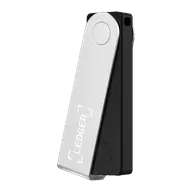
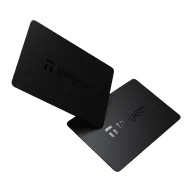
Tangem Wallet and Ledger Nano X are hardware wallets built on two different concepts. Tangem is an NFC card without a display or battery that only works together with the smartphone app. The Nano X is a device with its own display, buttons, Bluetooth and USB. Both keep the key in a secure element and support Bitcoin, Ethereum with EVM networks and Solana.

With Tangem (list price USD 54.90 for a set of two cards) you check transactions in the app for Android or iOS; there is no desktop connection. By default, the backup consists of two to three cards that carry the same wallet, without a seed phrase. A BIP39 seed is optional. If all cards are lost and there is no seed, the wallet is lost. The app is open source, the firmware partly. Details in the Tangem product profile.

The Ledger Nano X (list price EUR 99) shows address and amount on its own display, where you confirm them. It works with Windows, macOS, Linux, Android and iOS. The backup is a 24-word BIP39 seed with an optional passphrase. The firmware is not open source. Details in the Nano X product profile.

There is no test winner. If you want a display to check every transaction and a desktop option, compare the Nano X; if you want a card without managing a seed and only use your smartphone, look at Tangem and plan the backup cards carefully.
01

Ledger Nano X

Pros

  • Bluetooth signing with iPhone and Android; USB on a computer
  • Compact device with its own screen and buttons
  • Multiple assets, including Solana, through compatible wallet apps

Cons

  • Small monochrome screen; no touch controls
  • Closed firmware core; client only partly open source
  • No QR air-gapped mode or NFC

more suitable if...

  • If you want to sign with an iPhone or Android device over Bluetooth and use Ledger apps.
  • If you want a compact device with a battery and can work with buttons and a closed firmware core.
02

Tangem Wallet

Pros

  • Card form factor without battery
  • Secure Element with EAL6+ manufacturer information
  • Multi-chain including BTC, ETH/EVM and SOL
  • Client designated as open source
  • Multi-card backup with no seed phrase as standard

Cons

  • No display; Transactions are displayed in the smartphone app
  • No air gap
  • No Windows, macOS or Linux support
  • Firmware only partially open source
  • Loss of all cards without a seed means loss of the wallet

more suitable if...

  • If you want to work with an NFC-capable smartphone and a wallet in card format.
  • If you can store several backup cards separately and check transactions in the smartphone app.

Sources & notes