Buy Crypto with SEPA, Instant Transfer or Card
SEPA, SEPA Instant or card for buying crypto: distinguish bank transfers, platform crediting, additional costs and withdrawal conditions.
In this guide
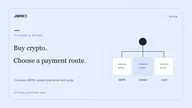
Before buying crypto, you need to fund the platform with euros or pay for a purchase directly. SEPA, SEPA Instant and cards differ in processing and costs. Distinguish three steps: money transfer, crediting by the provider and availability for trading. A fast transfer alone guarantees neither immediate trading access nor immediate crypto withdrawal.
The guide Brokers in Germany, Austria and Switzerland vs international exchanges declares broker against CEX and touches on CASP. This text remains on the everyday question Deposit. No second CASP chapter. No cost leaderboard.
Deposit is not withdrawal. Fast in doesn't mean fast out.
SEPA
Classic transfer - often without instant speed.
Instant
Own line. If it is missing, it is not a “fast SEPA”.
Card
Immediate feeling with your own fee cell - unknown remains unknown.
SEPA, Instant and card: what to check for each

SEPA is the documented euro transfer to the platform's account. In comparison, the line is called SEPA deposit. Whether it is free is stated in one others Cell (SEPA deposit fee). “SEPA yes” alone is not a fee statement.
SEPA Instant is a separate feature in the comparison table. A documented SEPA deposit does not establish Instant support. Both the sending bank and the recipient must support Instant. Product pages show the documented details.
A card payment may fund a deposit or a direct purchase. Check the total amount in the confirmation, possible card and currency fees, and limits. Payment approval and the availability of purchased coins for external withdrawal are separate processes.
Further reading: Crypto card in everyday life.
The three rails sit next to platform type, recurring investment plan and payout. A broker with spread and a CEX with maker/taker can carry the same SEPA cell — and still have completely different purchasing costs. That's why you filter rails and read costs separately.
SEPA Instant enables fast euro transfers between participating payment service providers. Crediting a trading account may still depend on allocation, checks and platform processes. Verify the intended payment route, recipient details, reference and limits instead of treating bank confirmation as proof of available trading funds.
Card deposits can fail due to limits, 3-D-Secure and rejection by the card-issuing bank. A declined card is not proof that the platform has “no card” — and a successful test amount is not proof of the fee cell. Only the documented percent or euro line counts.
Filters and chips in comparison
In Crypto exchange comparison control the preselection chips Entry-level and Spot CEX the trading interface — broker/app purchase against order book. They do not replace the deposit filter. For documented SEPA deposits, you use the chip or deep link deposit_sepa=1 and pool=all.
Example: Broker with SEPA filter shows the intersection of platform type broker and SEPA yes. Instant and Card remain separate column rows - the SEPA filter does not display them.
What the filter not can: instant or force card if the cell is unknown or no. Unknown policy is not a filter option. That's what it says in the Methodology crypto exchanges: missing information remains blank.
Entry Chip and Spot CEX Chip answer a different question: How do you buy when the fiat is there? Spread in the app against order book. If you just press the entry chip and skip the deposit lines, you are comparing purchasing surfaces - not funding. Who only deposit_sepa=1 sets and ignores the platform type, mixing brokers, CEX and other types in a SEPA intersection. Both are allowed; both are incomplete if you only read one of the two levels.
International exchanges may also offer SEPA. The comparison without a broker filter shows this wider selection. Assess the payment route and trading model separately: the same deposit method can involve different purchase costs and withdrawal conditions.
Provider examples from the August 2026 catalog
The following five provider examples use catalog data and sources recorded in August 2026. They illustrate how to read SEPA, Instant, card support and fees separately. Conditions were not collected again for this editorial revision. The current payment options and terms of your account govern your purchase.
-
21bitcoin — SEPA yes, SEPA Instant No, card deposit yes. Bitcoin-only broker. We charge deposit fees for SEPA, Instant and card Unknown. If you need Instant, you won't find a receipt here - regardless of your CASP status.
-
BISON — SEPA yes, Instant yes, card yes. SEPA and Instant deposit fee respectively EUR 0 documented; Card deposit fee Unknown. Instant is its own yes cell here, not derived from SEPA.
-
Bitpanda — SEPA yes, Instant yes, card yes. All three rails are occupied; The three fee cells (SEPA, Instant, Card) remain with us Unknown. Rail yes does not mean fee 0.
-
Trade Republic — SEPA yes, Instant yes, card yes. SEPA and instant deposit EUR 0; Card deposit 1% according to the recorded price list. The 1% refers to card deposits. Trading fees and spread are considered separately.
-
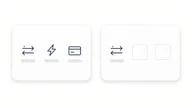
Scalable Capital — SEPA yes, Instant Unknown, card Unknown. SEPA deposit fee EUR 0. The dashed slots in the diagram above hit exactly these gaps: not “Scalable can’t use Instant”, but “we haven’t occupied it”.
Read the product page and comparison column of the same SKU. Tiers or ETP notes do not change the rail question: first rail, then purchase product, then payout.
Two patterns from the table without ranking: Instant no in an otherwise full SEPA world (21bitcoin) and SEPA yes unknown for instant/card (Scalable). The first is a proven no. The second is a gap. Both are misread if you turn it into “SEPA is enough, so everything is quick”.
Some providers also support PayPal or other deposit methods. This selection covers SEPA, Instant and cards. Check the product page for PayPal availability; a missing entry establishes neither support nor exclusion.
Deposit is not withdrawal
Euro in and crypto out are different cells. Payout your own wallet explains which platform pays out on-chain — and why Scalable is listed differently than a spot broker with wallet payout.
Anyone who deposits quickly with a card does not have any proof of a cheap or quick payout. Anyone who only uses SEPA does not have any proof against self-custody. The role question underneath — broker, crypto exchange, app — remains Broker, exchange, Bitcoin-only.
Check the payment route and its additional costs first, then the purchase price and trading fees, followed by withdrawal terms. If you plan to transfer to your own wallet, establish its asset and network support and backup method before buying.
The affiliate “Open an account” button does not establish Instant support. The linked provider sources on deposit methods and fees are decisive. According to the methodology, commissions do not affect the sorting order.
Methodology and gaps
The Methodology crypto exchanges notes: no overall score, scenario costs without deposit fee in the standard example, missing information remains blank. The access status of the matrix is there. This text does not invent instant line and card percentages.
For domicile, regulation and the provider role, see Brokers in Germany, Austria and Switzerland vs international exchanges and in Overview 2026.
According to the methodology, scenario costs in the comparison table — where they exist — typically describe the purchase, not the deposit fee. A platform with EUR 0 SEPA can seem more expensive to purchase than one with card percentage if spread or order fees dominate. That's why rails and scenario stand next to each other, not as a number.
What we don't do
This comparison uses documented deposit methods and fees, rather than test purchases. Purchase costs including spread, trading fees and any currency conversion need a separate check. Using a crypto card for daily payments is covered in its own guide.
Compare: Crypto exchange comparison. Broker cut: Regional brokers vs centralized exchanges. Out: Payout your own wallet. Rules: Methodology.
In practice: compare two payment routes fairly
For example, compare a SEPA deposit and a direct card purchase using the same euro budget. Record how much remains for buying after payment fees and how much crypto the confirmed quote provides. A percentage fee on the deposit and a spread on the purchase have different calculation bases.
Also record waiting conditions: when can the balance be traded, and when can the coins be withdrawn? A fast payment may offer little benefit if a subsequent waiting period delays your planned transfer.
Frequently asked questions
Is SEPA Instant the same as SEPA?
No. Instant is a separate feature. A documented SEPA deposit does not establish Instant support. Check the platform and your bank.
Which of the five pages did Instant occupy?
The August 2026 data recorded Instant for BISON, Bitpanda and Trade Republic; 21bitcoin showed no and Scalable Capital unknown. These historical examples were not collected again here. Check current support for your account before depositing.
Does the card deposit at Trade Republic cost anything?
The historical August 2026 example lists 1 percent for card deposits. Check today’s price list and the amount in the payment confirmation. Deposit fees, purchase costs and spread must be accounted for separately.
Is SEPA enough to pay out to your own wallet?
No. Deposit and withdrawal are separate lines. Whether the platform pays out on-chain is stated in the payout cell and in the payout guide for your own wallet.
Where can I find information about provider regulation?
The linked guide to brokers in Germany, Austria and Switzerland versus international exchanges covers domicile, MiCA/CASP and the broker or exchange role. Source rules are in the methodology.