Crypto Card Fees Explained: Everyday Costs & Limits
Calculate crypto card costs fairly: check subscriptions, conversion, foreign currency, cash withdrawals and cashback for your actual spending.
In this guide

Paying with a crypto card can involve several processes: access to a balance, conversion into the billing currency and processing the card payment. Some programs charge fiat, others crypto or stablecoins. Check which balance your specific card tier uses and what each step costs.
What counts in the price list is rarely the big heading “free”. The lines below are crucial: spreads when selling, FX markups outside the home currency, ATM limits and dormant fees.
The most expensive fee is the one you only see after checkout.
Read
Lines under the heading, not the promise.
Everyday life
FX, ATM and inactivity hit more often than the annual fee.
gap
“Under review” does not mean “free”.
The layers under one payment
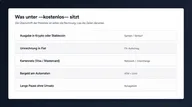
- Edition. The card debits a credit balance in crypto, stablecoin or fiat from the provider. Selling in the billing currency often has a spread — even if the card has “no annual fee.”
- FX. Payments outside of the billing currency may carry a surcharge, in addition to the network.
- Network. Visa or Mastercard charge interchange and scheme fees. You rarely see them as a separate line, they are stuck in conditions and cashback.
- Cash. ATM fees plus monthly limits. A “free” ATM withdrawal is often only valid up to a certain amount.
- Calm. Some programs calculate after months without sales. This is almost never in the hero line.
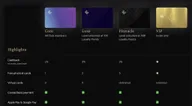
Check the price list: fixed costs and usage costs
- Annual or monthly price: often the smallest item if you actually use the card.
- How is crypto sold into payment currency? Market price, own price, spread information?
- FX outside EUR (or home currency): percent plus any minimum amounts.
- ATM: Price per withdrawal, free quota, daily and monthly limit.
- Inactivity, replacement card, delivery, extra cards — the footnotes.
- Cashback: on which turnover, in which asset, with which cap, according to which exclusions?
Include cashback in the same calculation as the costs of the spending that earns it. On 100 euros of eligible spending, an illustrative 2 percent cashback rate earns 2 euros. If that spending incurs 3 euros in additional conversion costs, the result is a 1 euro disadvantage before other costs. This calculation applies only if rewards and fees actually use the same spending basis.
Country coverage and eligibility
A card that exists in the USA or in an App Store region cannot therefore be ordered in Germany, Austria or Switzerland. Decide on identity verification, issuer and place of residence. In our comparison, missing evidence means “under review”.
Cards often sit on an exchange or broker. The role underneath — who keeps custody — remains a question Broker, exchange, Bitcoin-only app.
Source dates and limits of the information
We do not list a “best card” and do not carry out our own practical tests. Availability and conditions in the Germany, Austria and Switzerland region are changing. Compare instead of choosing: Crypto cards comparison.
Calculate conversion, foreign currency and cash withdrawal costs separately
For everyday use, consider conversion, foreign currency and cash withdrawals separately. These costs can occur together but use different calculation bases. Alongside provider pricing, consider possible ATM operator fees and currency conversion offered at the terminal.
spread mostly sits before of the card: when selling crypto or stablecoin in the settlement currency. The card can have “no annual fee” and still be expensive if the selling rate is off market. The number is rarely written next to the plastic photo. It can be found in the fee or spread documentation of the issuer or the exchange below.
FX sits while of payment if the terminal currency is not the settlement currency. A surcharge in percent plus a possible minimum amount. Visa and Mastercard rules explain the network, not your program's markup. The program page must contain the line. If we don't have it, that's it “under review” — not 0%.
ATM sits next to it: Price per withdrawal, free quota, daily and monthly limits. “Free cash” often only applies up to an amount or number of withdrawals. The fee and limit then apply at the same time.
An example without made-up sentences: EUR 40 at the ATM on vacation can stack spread (sale), FX (foreign currency) and ATM (withdrawal). The hero line “free” describes none of these. Read the three cells on the product page, like this Map comparison, instead of taking a marketing number as an invoice.
The underlying platform and who holds custody are covered in Broker, exchange, Bitcoin-only app. The card inherits that counterparty risk.
Cashback and saveback: requirements and usable value
Cashback is a discount with conditions: on which turnover, in which asset, with which cap, according to which exclusions? Groceries, gas stations, crypto purchases, and gambling are often in the footnotes, not the banner.
Saveback — where a program puts a portion of sales into a savings or Bitcoin plan instead of paying out — is the same family with a different payout location. It's not a second salary or a risk-free interest rate. It is a program parameter. Whether the plan ends up with a broker, an app or on-chain changes the custody, not the fact that spread and FX can sit beforehand.
Compare cashback and saveback by the value you can use. Check eligible spending, exclusions, monthly caps and additional requirements such as savings plans or token commitments. A reward in a volatile asset may have a different euro value when used later than when credited.
What you can do: Cashback or Saveback cell and Spread/FX/ATM cells the same Place the program pages next to each other. If a cell is missing, the calculation is incomplete. Compare instead of choosing: Crypto cards comparison.
Two footnotes that often make everyday life more expensive than the banner: Replacement card and Delivery. A “free” card can have its own line if it is lost or sent to another EU country. There is no annual fee and no FX — and still part of the same price list. If we don't provide this information, it remains “under review”, not EUR 0.
Inactivity fees often apply after months without spending. If you keep the card as a backup, check this row first. With no spending, cashback or saveback does not offset a fee. The underlying exchange or broker changes who holds the funds, rather than this calculation. See Broker, exchange, Bitcoin-only app for platform roles and the Map comparison for card program details.
In practice: use your monthly spending profile
Divide planned spending into euro payments, foreign-currency payments and cash withdrawals. Assign the relevant fees and limits to each group. Add monthly and annual fees and one-time costs separately. This shows which conditions actually matter for your usage.
Calculate rewards only on eligible spending and apply the cap. Use the linked cashback calculator for a traceable euro calculation. Then compare with your existing payment method: the additional costs and usable benefit of switching are what matter.
Frequently asked questions
Is a crypto card a credit card?
Mostly no. Many programs are debit or prepaid on a balance. The name of the card brand (Visa, Mastercard) describes the network, not the credit.
Does cashback count as earnings?
It's a discount with conditions, not a risk-free rate. Exclusions and caps are listed on the program page, not in the advertising banner.
Why do you often say “under review”?
Because we can't fill the line. Reading an empty cell as “EUR 0” would be the most costly mistake.