Device
01- Form factor
- Other, USB
- Display
- Yes, monochrome
- Battery
- ✕
- Scope of delivery
- X1 Vault + 4 X1 cards, USB-C cable.
View sources: device
- Cypherock X1 product pageForm factor · Display · Battery · Scope of delivery
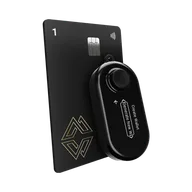 Illustration · not a product photo
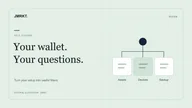
Vault-plus card system with 2-from-5 shard backup and Secure Elements on the cards; Multi-chain including Solana, firmware only partially open source.
Status: 14.08.2026
At a glance
As a hardware wallet, Cypherock X1 is a vault-and-card system rather than a conventional USB stick: one base device and four cards, with a 2-of-5 sharded backup and secure elements on the cards. Multi-chain support including Solana is documented; QR-based air-gapping is absent. Users expecting a standard BIP39 backup on paper will encounter its own sharding approach instead — this is listed among the drawbacks.
The client is open source, the firmware is only partially – unlike BitBox or OneKey. iOS and Android are supported, Bluetooth is missing, SLIP39 is not documented. In everyday life, this means more parts in the setup, but distributed backup instead of a single seed phrase on one device. Which two out of five parts are sufficient in an emergency should be included in the manufacturer's documentation before the initial purchase.
In terms of price, X1 is above USB entry-level devices and many nano models; the number of cards drives complexity and costs. This is not a “better because shards” assessment, but rather a classification of a different backup mindset with more moving parts.
Compared to Tangem or Keycard, there remains a vault with display logic; opposite Keystone shares Multi-Chain, but differs in backup philosophy and software openness. Compared to Ledger, there is no classic secure element marketing in stick format.
Shard loss and parts availability should be included in the manufacturer's documentation before the initial purchase - the catalog describes the model, not every edge case in a backup emergency.
If you want to compare alternatives, combine the characteristics table, pros/cons and the links under “Compare alternatives”.
You can also find the sources for individual information directly in the respective characteristics area.
Image source: Cypherock Assets — Product Page Standing Couple (owner-supplied) · Press photo · 2026-08-12